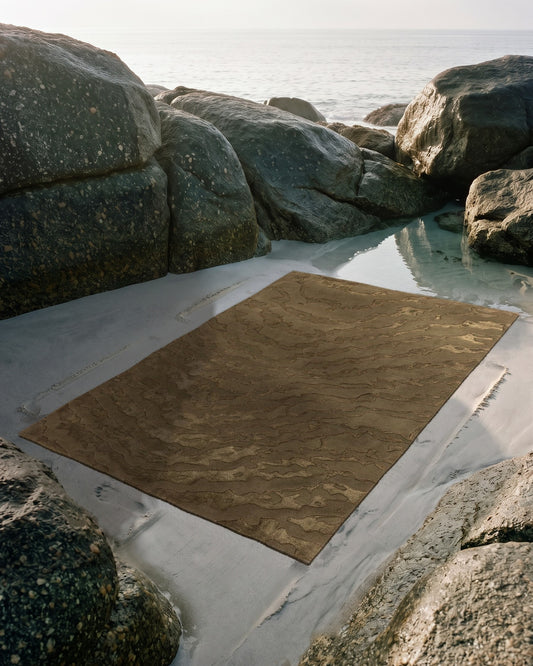
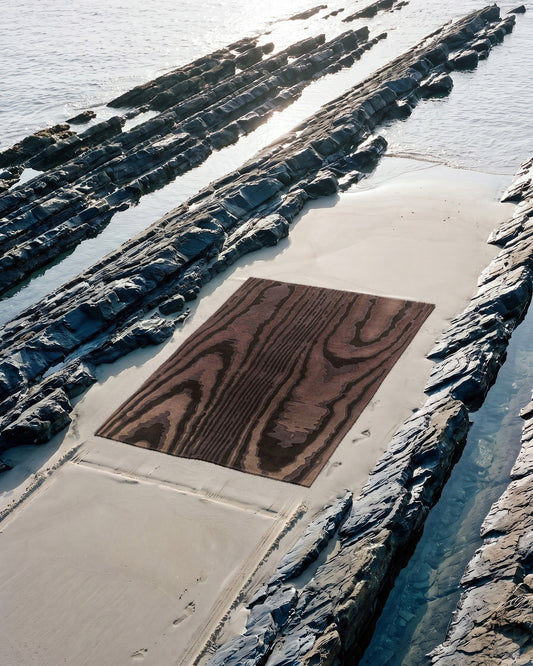
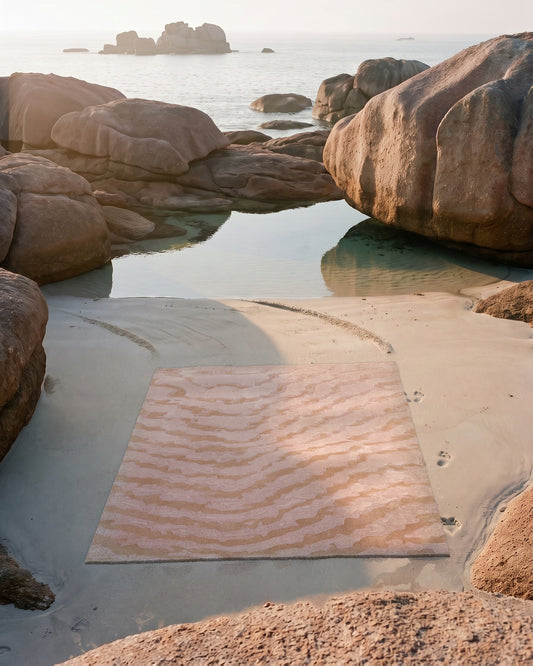
The beige rug is a decision. Not an absence of decision.
· 2 min read
There is a widespread idea that choosing a neutral rug means not choosing. A way of keeping options open, of offending no one, of making sure it will go with anything. Beige as an elegant fallback position.
The problem is that the floor is not a wall. It is the most closely read horizontal surface in the room, the one the eye constantly travels across, the one that decides whether the volumes hold together or float in a void. A rug that disappears into the floor does not free up the space. It empties it.
It has to be said that beige has many names to hide behind. Camel, sand, linen, ecru, ivory, greige, hemp, natural. An entire nomenclature devoted to making neutrality desirable, to giving it the appearance of a considered choice. It is a bit like the dress code of the wealthy neighborhoods, that register of quiet luxury which consists of spending a great deal so as not to be noticed. There is a whole sociology in it. Beige as a signifier of established good taste, of a refusal of ostentation, of belonging to a certain idea of elegance defined precisely by what it avoids.
In interiors, the result is the same. The camel that "warms," the sand that "brings light," the greige that "unifies." So many ways of presenting a non-decision as a sophisticated decision.
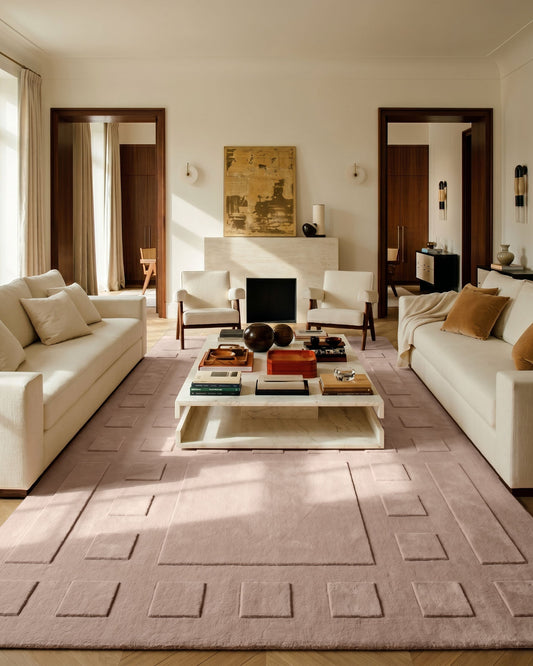
In most Parisian apartments, the parquet floors are already light. Natural oak, blond chevron, bleached wood. Laying a beige rug on blond parquet means adding two neutrals that cancel each other out. The eye no longer finds a territory, the sofa seems placed at random, the room lacks a center. Money has been spent to create the impression that the living room is unfinished.
Contrast is not a question of bold taste. It is a question of spatial legibility. A terracotta, a deep green, a graphite, even a rich beige with a real density of material, any clear-cut decision gives the floor an active role in the composition. It anchors the furniture. It defines a territory. It gives the room a gravity it did not have.
What the flat beige rug lacks is not color. It is presence. And presence can come from a strong shade, a pattern, a looped texture or dense wool with shifting reflections. There are a thousand ways to have a floor that matters without having a floor that shouts.
Choosing a neutral rug can be the right call. But it is a choice that has to be justified, not a given. The floor is perhaps the only place in an interior where you can introduce real personality without touching the walls, without changing the furniture, without undertaking renovation work. It is an opportunity. Treating it as a non-decision means wasting it.