The most expensive furniture in the world can't stand without a floor
There's a very common mistake in interiors that aim for high-end. It's rarely called by its name because it's invisible to the person making it. It looks like this: an exceptional sofa, a sculpted coffee table, a designer light fixture, and beneath it all, nothing. Bare parquet flooring, or worse, large format anthracite gray tiles that look like they came out of an airport catalog.
The furniture floats. Literally. Each piece exists for itself, unrelated to the others, without an anchor, without gravity. A lot was spent. The result looks like a showroom closed on Sunday.
This isn't a budget problem. It's a logic problem.
An interior is not a collection of objects. It's a system of planes organized in relation to each other. The vertical plane, the walls. The aerial plane, the ceiling, the light fixtures. And the horizontal plane, the floor, which is the only one the eye constantly, continuously, effortlessly reads. It's what gives scale. It's what connects. It's what decides whether volumes hold together or ignore each other.
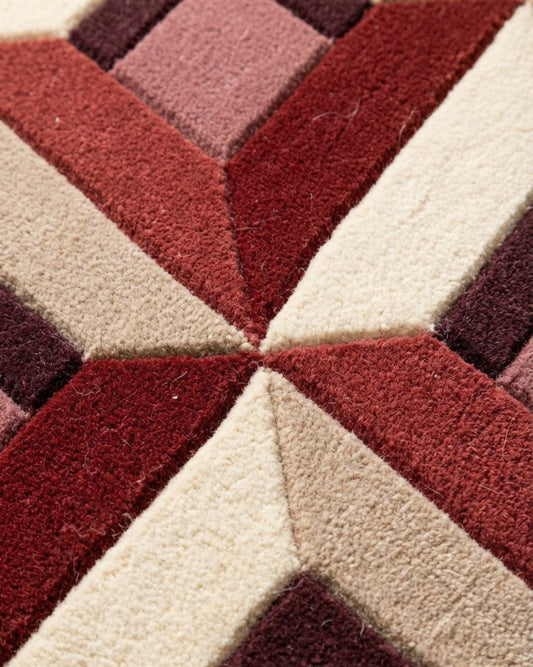
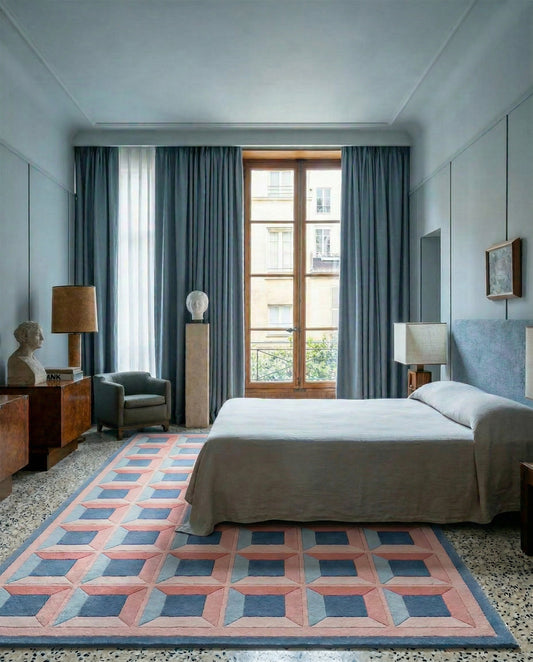
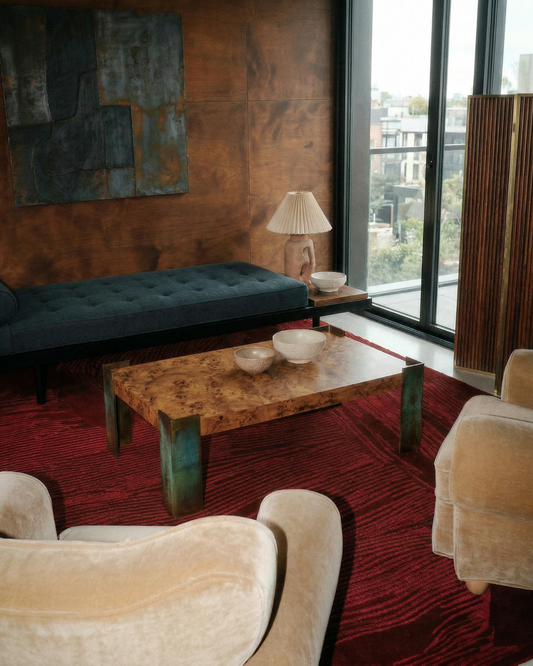
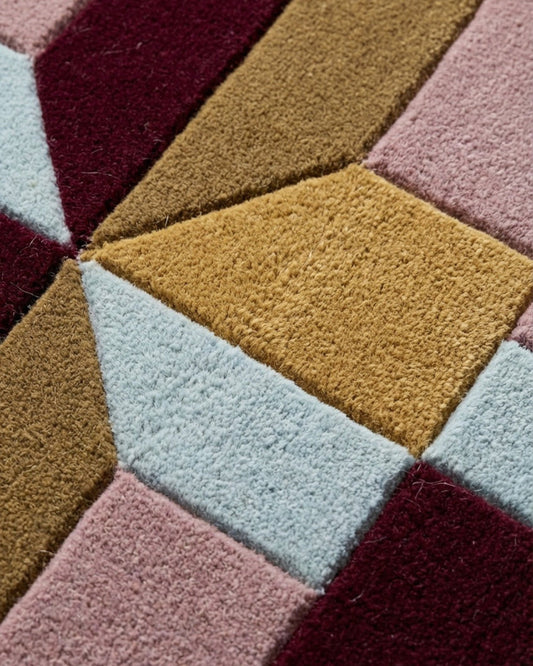
The rug is this horizontal plane. Not a decorative element placed on top of it. The plane itself.
When it's missing, the sofa has no territory. The coffee table has no center. The seating, even perfectly chosen, seems randomly arranged by someone waiting for another piece of furniture that never arrived. You can add many objects, paintings, carefully sourced accessories. Nothing will make up for the absence of what should have been placed first.
Great decorators know this. They start with the floor, not because it's a rule, but because everything else depends on it. The rug's color determines the palette. Its size determines the proportions. Its pattern, or lack thereof, determines the level of graphic tension the room can handle.
To start with the furniture and finish with the rug is like building a sentence by starting with the adjectives.