A custom rug is not chosen to disappear under the furniture. Three strategies make it possible to think of it in dialogue with the room: tonal harmony, which extends the existing balance; controlled tension, which introduces a measured gap; and the clean break, which sets the rug up as the visual focal point of the space.
The rug occupies a singular position in a room. It covers a large surface, it structures the flow of movement, it draws the eye to the floor the moment you walk in. Yet it is often chosen last, as a neutral background meant to offend no one. This caution produces flat interiors, where the rug merely exists without ever taking part in the overall composition.
Composing a rug in Studio Rugier comes down to asking a simple question: what relationship should this rug have with the room that receives it? Three coherent answers emerge. Each one rests on a clear intention and on concrete choices of colors, materials and shapes.
Tonal harmony: extending the balance of the space
The first strategy consists of placing the rug within the color range already present in the room. You note the dominant shades of the walls, the textiles, the wood, then compose a rug that takes up these values while nuancing them. The goal is not to copy a color identically, but to work within the same tonal family, with variations in saturation and lightness that create depth.
This approach draws on a long decorative tradition. The modernist interiors of the 1930s, especially those inspired by late Art Deco, played on tone-on-tone schemes of beige, earth and ivory to create a hushed continuity between floor and walls. New Zealand wool lends itself particularly well to this exercise: its ability to absorb deep shades allows subtle gradations, while the addition of silk brings highlights that enliven the surface without breaking its unity.
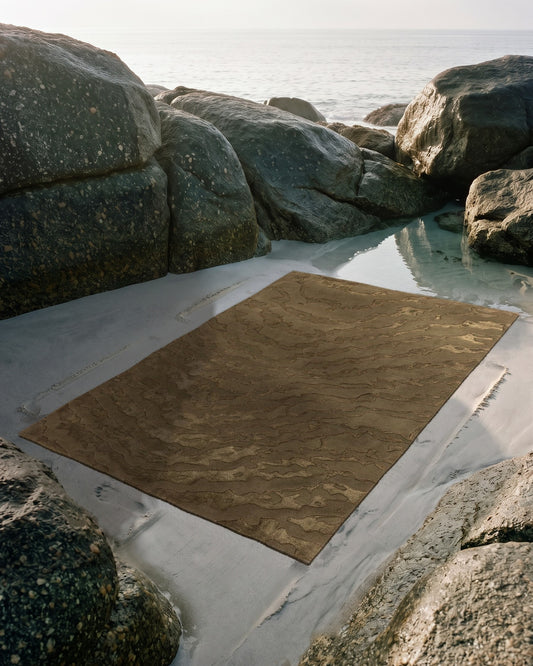
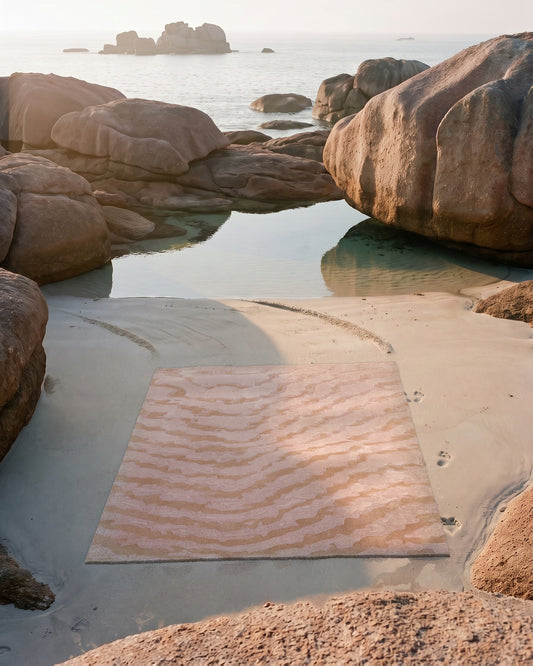
The Moire collection illustrates this logic well. Its moiré effect, inherited from old textiles in which two fabrics were pressed together to obtain a rippling shimmer, creates movement within a single color. The rug stays in harmony, but it vibrates. It is the ideal route for a room that is already busy, where you want to bring calm rather than multiply the focal points.
Controlled tension: introducing a measured gap
The second strategy rests on a deliberate but controlled offset. You keep a dialogue with the room while introducing an element that slightly contradicts the whole: a complementary color, a geometric pattern in an interior of soft lines, an unexpected material. Tension arises from this gap, provided it remains legible and intentional.
Op Art offers a valuable vocabulary for this approach. The research of Victor Vasarely and Bridget Riley in the 1960s rested on calculated contrasts that engage the eye without ever disorienting it at random. Every interval, every alternation of values follows a logic. The Optical Palazzo collection transposes this precision into wool: a rug with an optical pattern placed in a living room with understated volumes creates a fruitful tension, where the floor becomes the energy point of the room.
Controlled tension calls for restraint: a single strong gap is enough; multiplied, it dissolves into disorder.
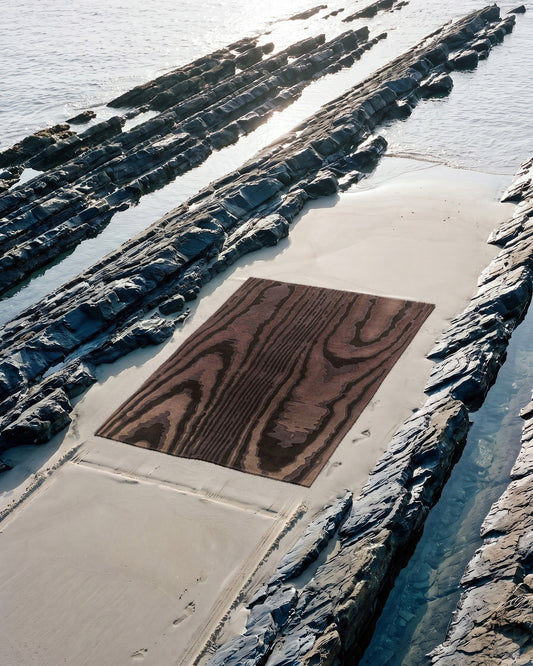
Relief also belongs to this register. The La Pintura collection, whose motifs are sculpted into the depth of the wool through carving, introduces a tactile tension. Where the color remains restrained, the relief creates a play of shadows that catches the raking light of morning or evening. The room keeps its visual calm, but the rug adds a physical dimension that you discover as you walk.
The clean break: making the rug a focal point
The third strategy embraces a sharp contrast. The rug no longer seeks to blend in: it asserts itself as the central event of the space, around which everything else is organized. This approach requires an interior pared back enough to give the rug room to shine; otherwise, the room sinks into cacophony.
The postmodernism of the Memphis group, founded in Milan by Ettore Sottsass in 1981, turned this boldness into a method. Bright colors, asymmetrical shapes, motifs that reject reassuring symmetry: Memphis furniture was designed to shake up functionalist orthodoxy. The Nostalgia Plastica collection inherits this spirit. A rug from this family, placed in a neutral interior, becomes a statement, a starting point from which more understated furniture can then be arranged.
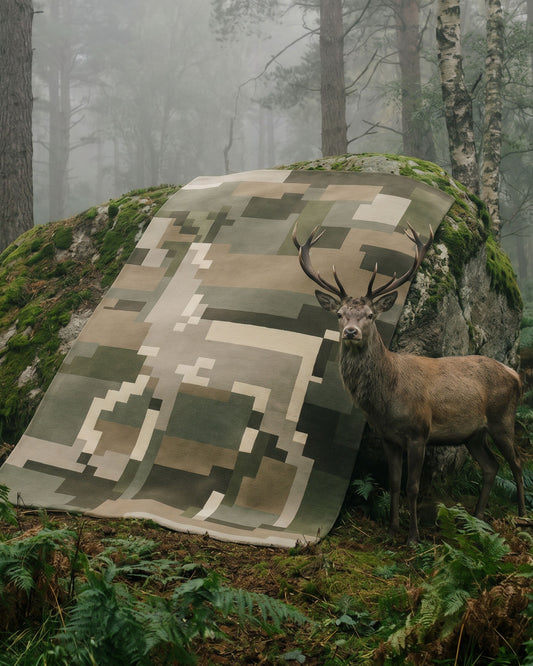
The break can also come through a figurative motif. The Highland Grounds collection, with its animal depictions and its Highland wool, introduces a narrative imagination where abstraction is usually expected. The rug then tells a story; it anchors the room in a specific atmosphere, between a Scottish landscape and a domestic bestiary.
Choosing your strategy before choosing your colors
These three routes are not equally suited to every room. A bedroom often benefits from tonal harmony, which encourages rest. A study or an entryway handles tension well, as it stimulates without exhausting. A large living room with light surfaces readily welcomes a clean break, provided it is given the leading role. Deciding on the strategy early then clarifies every trade-off of color, material and size.
This is where custom work takes on its full meaning. Composing in Studio Rugier lets you adjust a shade to the exact degree, calibrate a contrast, and choose between wool alone and the addition of silk depending on the effect you want. Each rug is then hand-tufted in Bhadohi, in compliance with GoodWeave certification. The rug stops being an accessory added as an afterthought and becomes a considered response to the space, in the harmony, tension or break you have deliberately chosen.